The Gray Color Transition in LEGO History
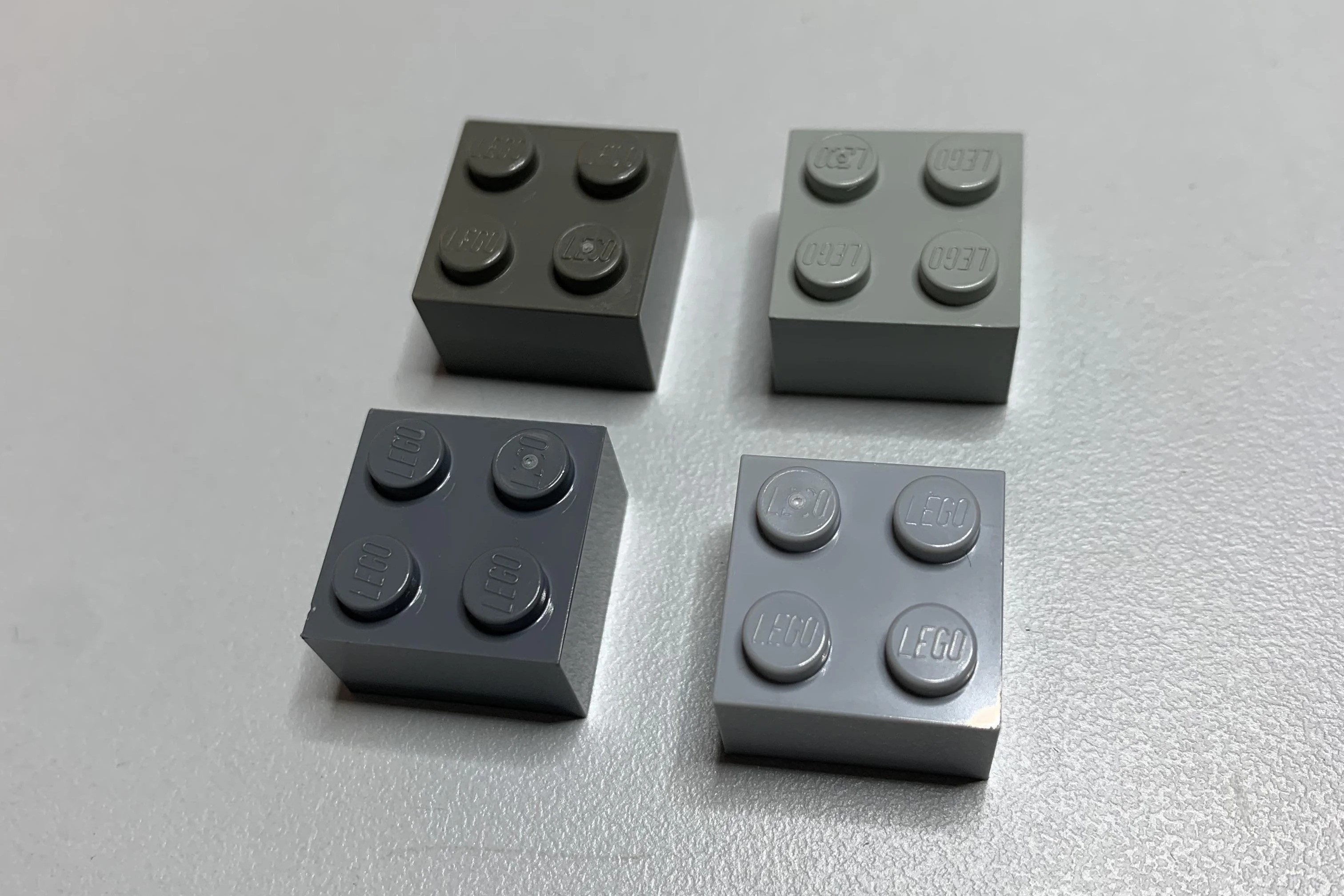
In the early 2000s, the LEGO Group made one of the most controversial decisions in its history: phasing out its original gray shades in favor of a modern, slightly cooler color palette. This transition is known by adult fans of LEGO (AFOLs) as "The Gray Change of 2004".
The Original "Old Gray" Colors
From the early days of LEGO in the 1950s until 2003, the company used a warm-toned gray palette. These colors were highly valued for their realistic, stone-like appearance, which was perfect for historical themes like Castle and Western.
A warm, yellowish gray. It had an organic tone that gave castles a weathered, historic appearance.
A cooler, slightly brighter gray with distinct blue undertones. It offers a modern, clean look.
The shift mirrored the light gray change: moving from an earthier, brownish-gray hue to a sharper, bluish-gray tone.
A warm, dark slate color with earthy undertones. Excellent for realistic rock faces, terrain, and weathered castle accents.
A cooler, slightly lighter dark gray infused with blue tones. Perfect for sleek spaceships, modern infrastructure, and dark steel.
Why Did LEGO Change the Palette?
The transition was driven by several manufacturing, logistical, and aesthetic reasons:
- Fading and Discoloration: The original gray was highly susceptible to UV yellowing. Exposure to sunlight quickly gave the old gray a sickly, aged look.
- Color Consistency: The chemical formulation of the original gray made it difficult to maintain exact color matching across different factories.
- Aesthetic Modernization: Newer licensed themes like LEGO Star Wars demanded a sleek, metallic look. The blue undertones in the new gray simulated steel and spaceship hulls much better than the original warm gray.
Controversial decision
When the new Light Bluish Gray (officially named Medium Stone Grey by LEGO) and Dark Bluish Gray (Dark Stone Grey) were introduced in 2004, the community reacted with frustration. The new parts clashed heavily with older collections, making it difficult for builders to combine bricks from different eras without the colors looking mismatched.
Despite the initial backlash, the new bluish grays have now been the standard for over two decades. They are praised for their color stability, and their crisp look has elevated modern themes such as Creator Expert, Architecture, and Technic.
Contact us for comments, suggestions or corrections: info@brickma...